All research
Watershed-Agnostic Forecasting
An explainable, distributed CNN–LSTM hydrologic model that is not tied to a single watershed.
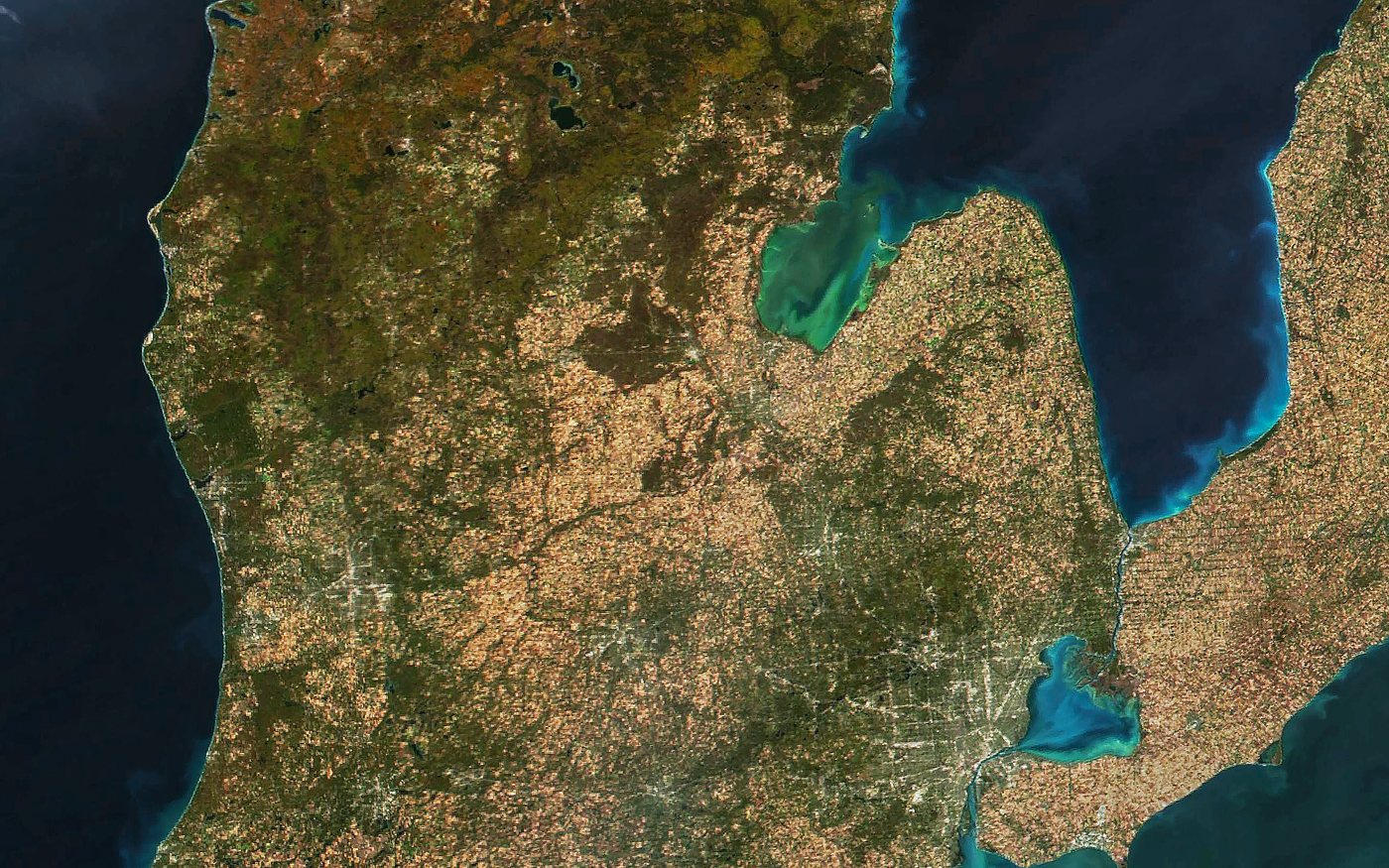
A CNN–LSTM that takes distributed (gridded) inputs and predicts streamflow without being trained for one specific watershed. Convolutional layers capture spatial patterns within a basin, and the LSTM captures how they evolve over time.
Explainability
Attribution analysis shows which regions and which inputs drive each prediction, so the model can be checked against hydrologic understanding rather than trusted as a black box. Published in Environmental Modelling & Software.
Publications
- EMS Journal
Watershed-agnostic modeling: An explainable, distributed, data-driven hydrologic model
Environmental Modelling & Software, 205, 107149 · 2026
@article{talha2026watershed,
  title = {Watershed-agnostic modeling: An explainable, distributed, data-driven hydrologic model},
  author = {Talha, Muhammad and Nejadhashemi, A. Pouyan},
  journal = {Environmental Modelling \& Software},
  volume = {205},
  pages = {107149},
  year = {2026},
  publisher = {Elsevier},
  doi = {10.1016/j.envsoft.2026.107149}
}
Related work
HydroTransformer
A transformer framework that learns streamflow from distributed, gridded inputs and generalizes across space and time.